
Stablecoin DeFi: How USDC and USDT Fit Into Onchain Markets
Compare USDC and USDT through issuer, network, liquidity, redemption, bridge, lending, and depeg risk rather than ticker alone.
Read the guide →DeFiUtopia.com is an independent field guide to decentralized finance, stablecoins, Bitcoin, Ethereum, Solana, tokenized assets, AI agents, and the risks that connect them.
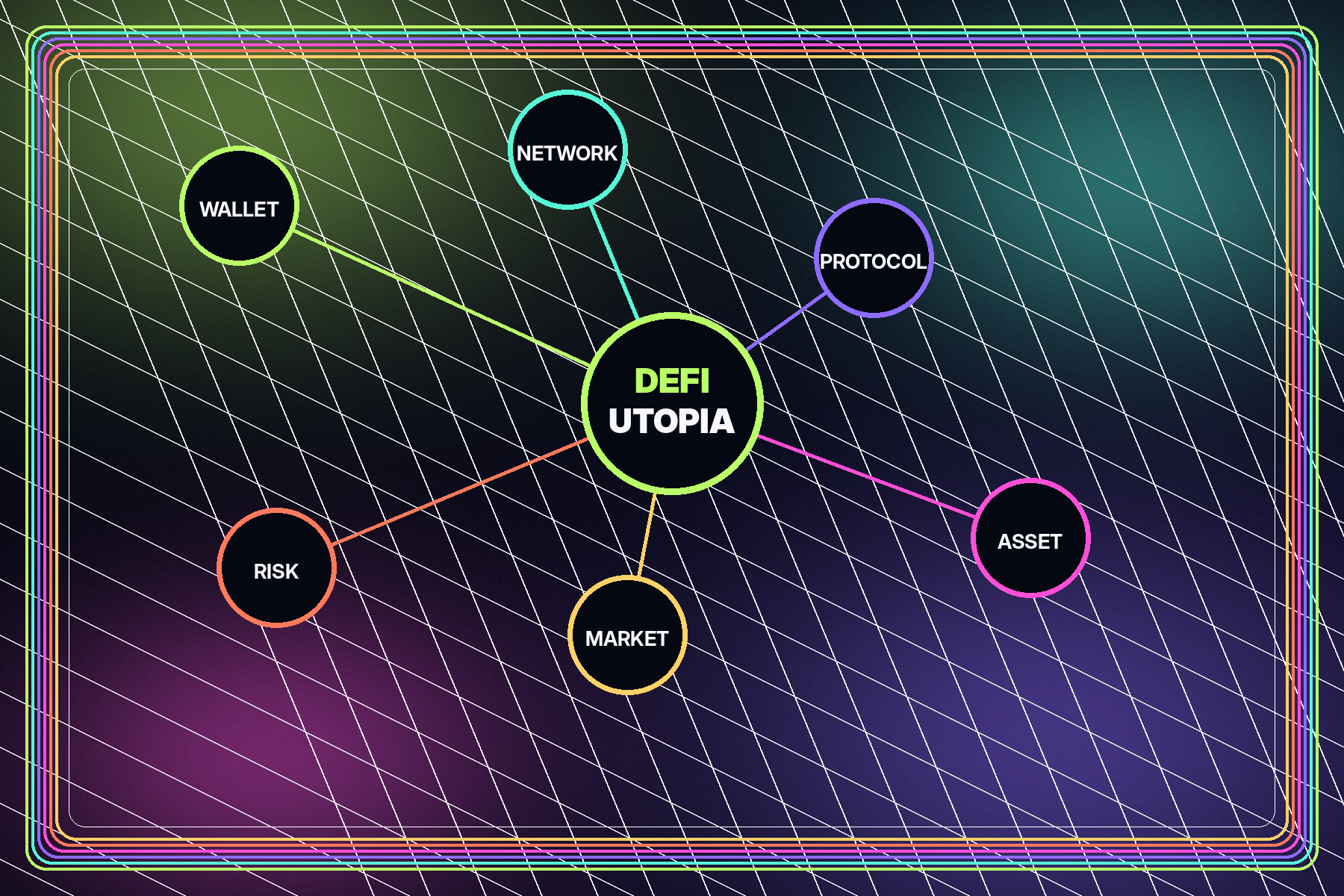
Start with the job you are trying to do. Then identify the asset, network, contracts, intermediaries, and exit path behind it.
USDC, USDT, redemption, native and bridged tokens, lending, liquidity, and depeg planning.
Explore stablecoins → ROUTE 02Accounts, gas, approvals, contracts, layer 2s, bridges, and composability.
Open the field guide → ROUTE 03Programs, token accounts, mints, fees, liquidity, lending, and bridge risk.
Open the field guide → ROUTE 04Real-world claims, custody, settlement, valuation, access, services, and platforms.
Map the architecture → ROUTE 05Use LLMs for research, monitoring, and transaction preparation while keeping facts verifiable, tools allowlisted, simulations independent, and keys outside the model.
Design the workflow →The interface is only the visible surface. A useful DeFi decision follows the asset through every contract, market, and institution.
Name the token, receipt, debt, legal right, network, and exact contract. A ticker is not a complete claim.
List wallet, issuer, bridge, oracle, protocol, administrator, market maker, and front-end dependencies.
Measure real liquidity, fees, timing, redemption, gas, and the route available during stress.
Each article contains one carefully selected primary or authoritative source, internal learning routes, and an explicit risk framework.
Compare USDC and USDT through issuer, network, liquidity, redemption, bridge, lending, and depeg risk rather than ticker alone.
Read the guide →
Design safer AI-assisted DeFi workflows with verified data, bounded tool access, transaction simulation, prompt-injection defenses, and human review.
Read the guide →
Classify token rights, supply, control, liquidity, bridges, yield, governance, and portfolio dependencies before relying on an altcoin market.
Read the guide →
A plain-language map of Solana programs, token accounts, transaction fees, DeFi liquidity, lending, liquid staking, and bridge risk.
Read the guide →
Use the access, service, asset, and platform layers to understand tokenized claims, interoperability, custody, data, and governance.
Read the guide →
Learn how RWA tokens connect legal rights, custody, valuation, cash settlement, redemption, and DeFi collateral into one layered claim.
Read the guide →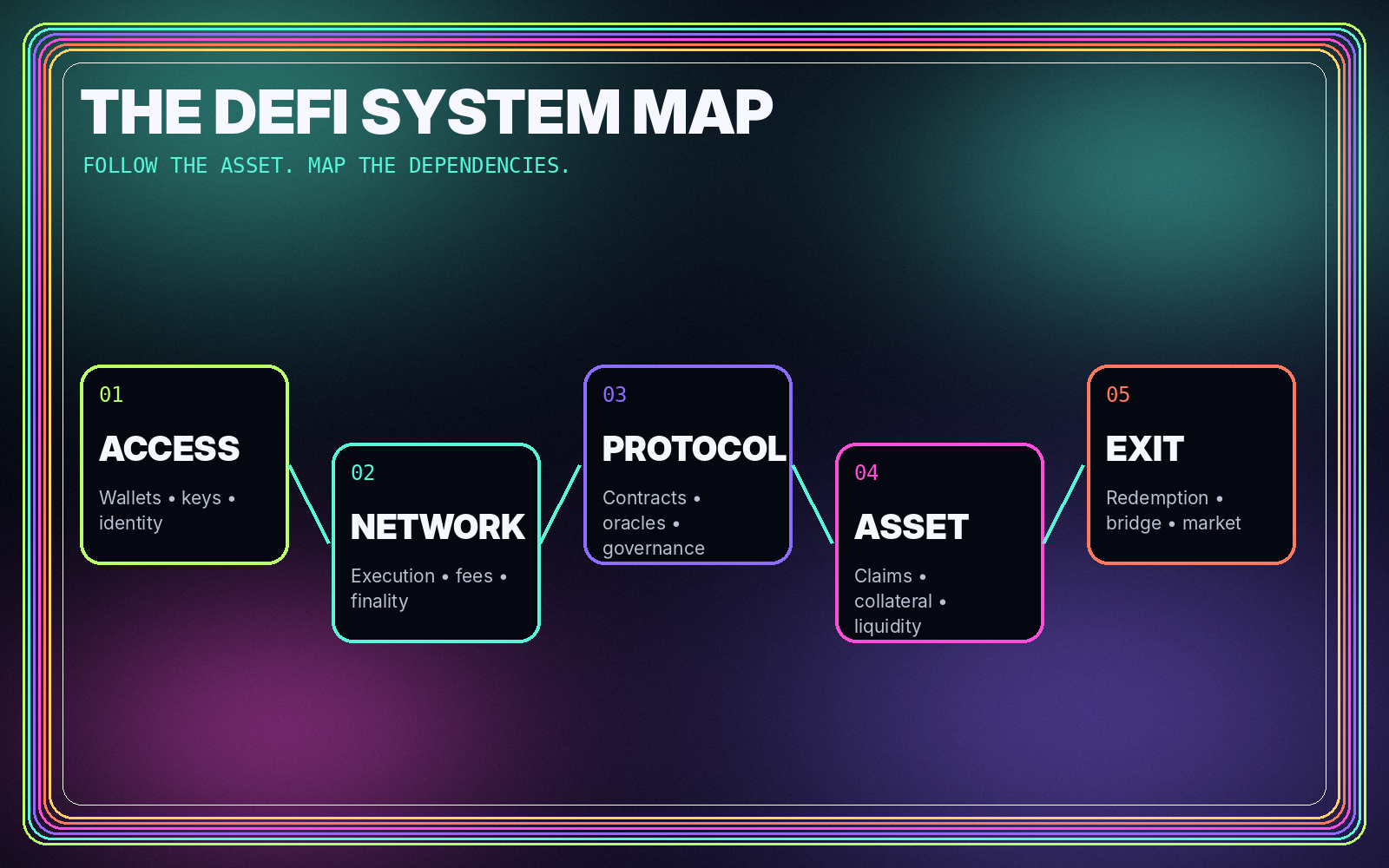
A token can move through a beautiful interface while depending on a custodian, bridge, oracle, administrator, and shallow market. The map makes those connections visible.
Decentralized finance is a set of financial applications that use blockchain networks and smart contracts for activities such as trading, lending, borrowing, staking, and asset management.
No. Trading is one use. DeFi also includes credit markets, payments, stablecoins, tokenized assets, governance, staking, and programmable settlement.
No. A stable target price does not remove issuer, reserve, redemption, network, bridge, contract, market, or access risk.
There is no universal best network. Ethereum, Solana, Bitcoin-connected systems, and other chains make different tradeoffs in execution, fees, liquidity, programmability, and security.
Only within strict controls. Safer designs use verified data, narrow permissions, independent transaction simulation, allowlisted contracts, limited capital, and informed human approval.
A real-world-asset token represents an offchain asset or claim. Its value depends on the legal rights, issuer, custodian, servicing, valuation, settlement, and redemption—not only the token contract.
Learn the stack, use a separate activity wallet, verify every contract and network, start with a small test, keep gas for the exit, and avoid leverage until the mechanics are clear.
No. The publication provides general educational information and risk frameworks, not personalized financial, legal, or tax advice.
Start with the beginner guide, keep the glossary nearby, and use a small test transaction whenever a network, token, or protocol is new.